Index Recent Pictures Pictures Video Drawings Wagging Banana Patterns
History Venus Images The Rescue Revived Links
Meccano Magazine Meccano Lion Card Model Butch
The Lion Locomotive
Index
Recent Pictures Pictures
Video Drawings Wagging
Banana
Patterns
History
Venus Images The Rescue
Revived
Links
Meccano Magazine
Meccano Lion Card Model
Butch
Lion Rescued
An extract from the Railway
World June 1953 Edition written
who found and organised the rescue of Lion from The Liverpool Docks
|
Resurrection of the
old Lion by Charles W. REED
Readers
will probably have noted from the popular
periodicals that an old locomotive, 115 years of age,
is
taking the star role in the film ' The Titfield Thunderbolt.' A short
history of this locomotive may, therefore,
be of
interest.
The
author is proud to have "discovered" this engine
and
been mainly instrumental in saving it from the scrap
heap;
when early in 1928, it was observed to be driving
an
antiquated chain-pump used for draining the Prince's
Graving Dock, Liverpool.
It was seen to be a very
early
type of locomotive, fixed on trestles, with the
cylinders working the driving wheels (acting as flywheels)
geared
to the pumps, with a cast iron driving shaft. The
locomotive was in a partially stripped condition with no
name
plate, the trailing wheels and coupling rods having
been
removed. It was an 0-4-2 type, with outside compound frames made of two
iron plates with a wooden
centre
piece. The outside cylinders of 11-in. diameter by
20-in.
stroke, with gab rod valve motion operated flat
slide
valves on top of the cylinders. It has a "Hakcock"
fire
box and a Trevithick regulator. The driving wheels
are
5-ft. diameter, and trailing wheels 3 ft. 7 in. diameter.
Total
wheelbase 12 ft. 8 in. The boiler is 8 ft. 6 in. long
and 3
ft. 9 in. inside diameter with 97 tubes.
The
maker's name was found and after some research
the
engine was indentified as the original locomotive
Lion,
Number 57 on the Liverpool and Manchester Railway Company, and
manufactured by Tod Kitson and
Laird
of Leeds in 1838. It later became No. 116 on
the
L.N.W. Railway List, and was sold to the Mersey
Docks
and Harbour Board in May, 1859, together with
two or
three similar locomotives and used for driving
pumps
at the drydocks, first at Langton Dock and later
at
Prince's Dock until 1928.
Steam
was supplied by its own boiler until the last
few
years when to save retubing, an adjacent donkey
boiler
was connected to the cylinders, by means of the
piping
shown in Plate A, which also shows the
loco-motive in position on trestles in the pump house.
Plate B
gives a
view of the fire box end at the same time. The
pump
itself was very primitive, consisting of flat boards
spaced
by chains, running over pulleys, like an endless
rope ladder, and drawing the water up a narrow vertical
chall.
As the boards were flat and the lift considerable
only a
few drops of water remained on the board by the
time it
reached the top outlet, and the efficiency must
have
been very low indeed.
Upon
the request for permission to photograph this
engine,
the Mersey Docks and Harbour Board investigated the pump and hurriedly
decided to scrap the outfit
and
install an electrically driven centrifugal pump. On
17th
September, 1928, the engine was withdrawn from
service
and moved outside prior to being sold for scrap
Plate C. The author enlisted the aid of the
Liverpool
Engineering Society with a view to saving it from the
scrap
heap and they finally purchased the locomotive. |
please click on images for fullsize picture
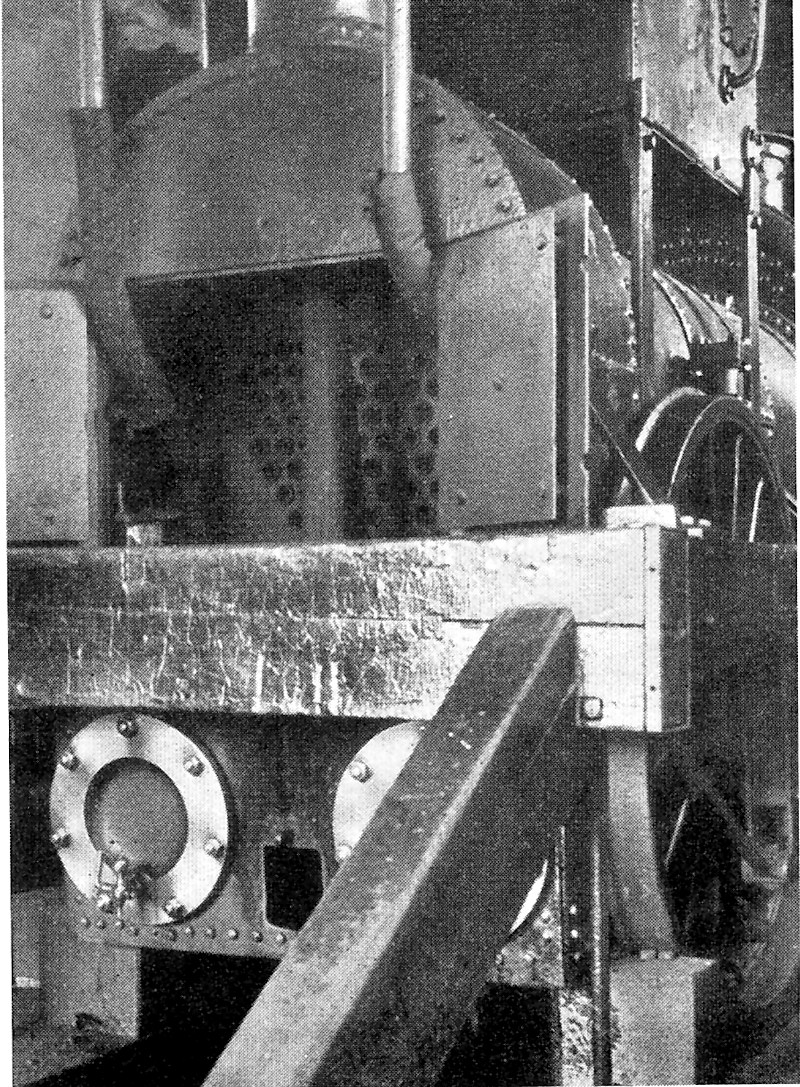
Plate A
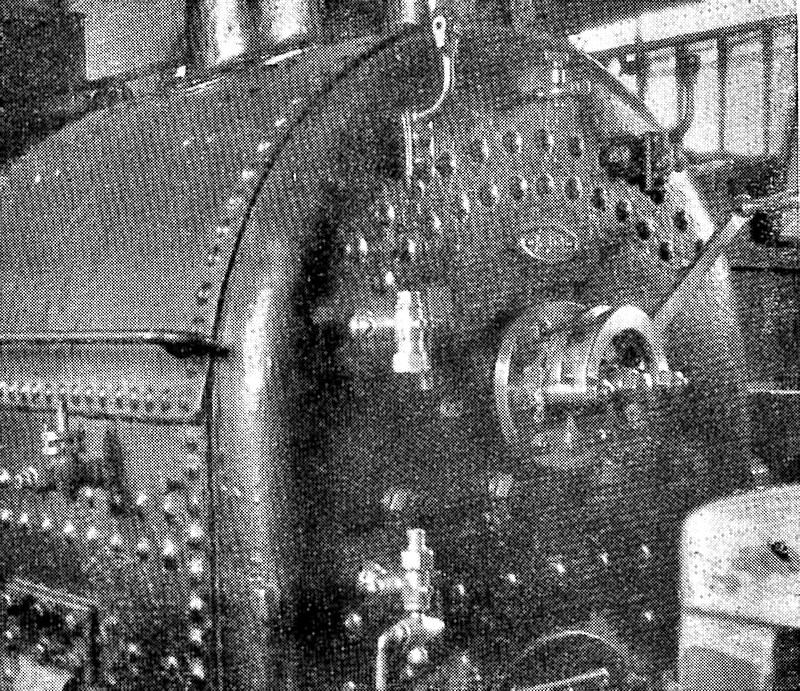
Plate B
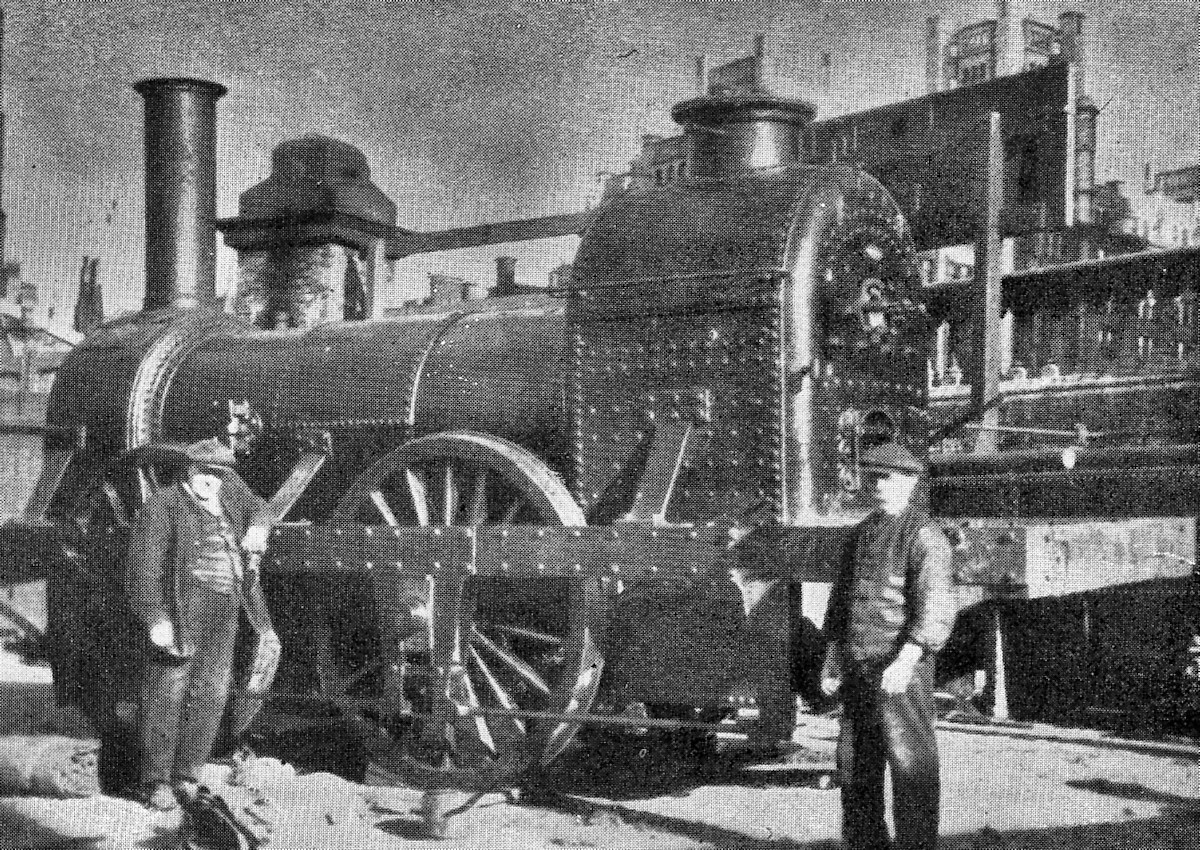
Plate C
All copyrights
acknowledged and held by the original owners.
Items are reproduced here to try and give the overall story of the Lion
Locomotive.
Any items will be removed if objected to by the copyright holders or
acknowledgements added.